Break up with 'AI First'
Why 'AI Second' Beats the 'AI First' Hype.
Insights
Jan 20, 2026
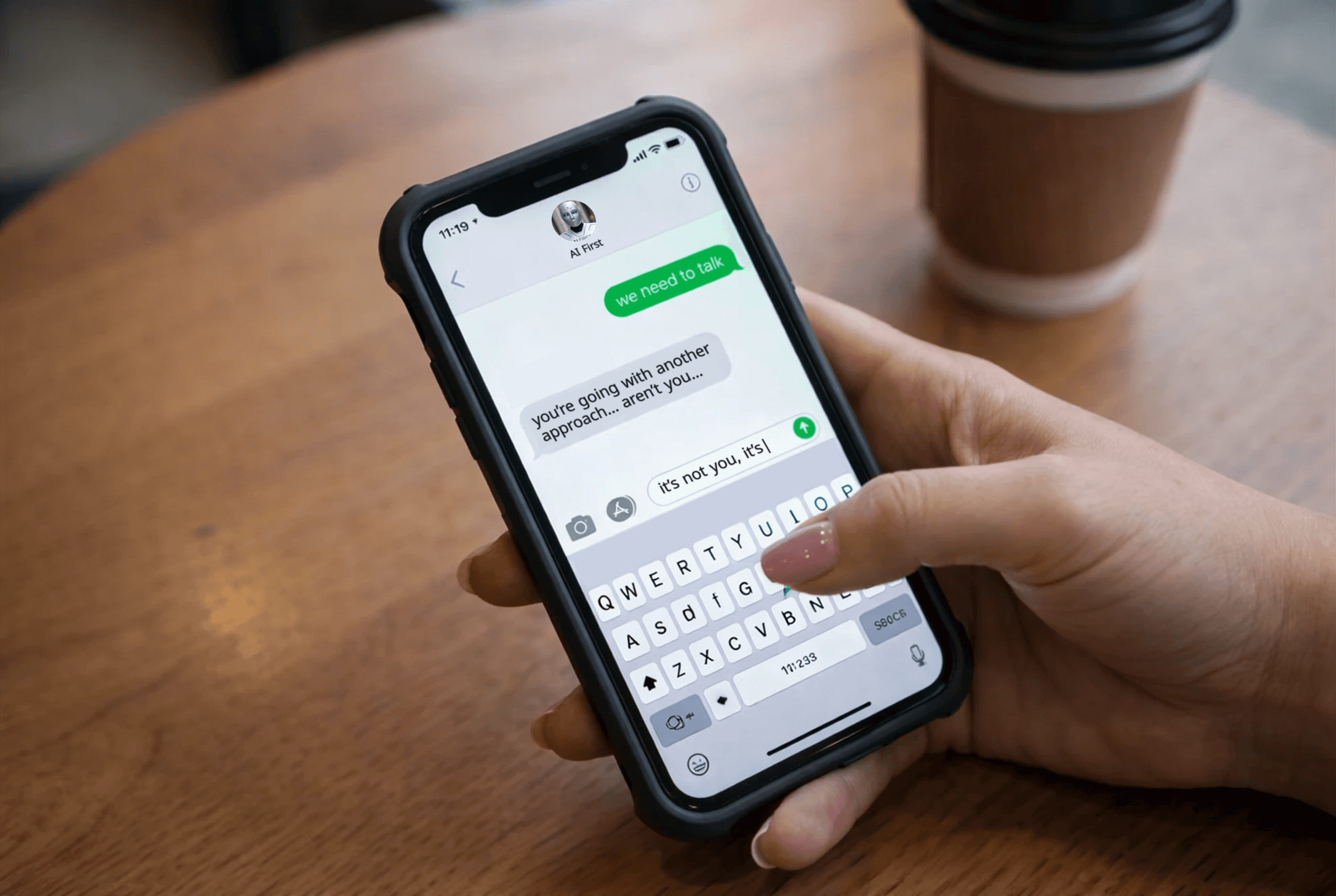
I recently tuned into Vitaly Friedman's insightful lesson, "The State of AI – Design Patterns For AI Interfaces," and one concept immediately struck a chord with me, reverberating through my experience as a Senior Experience Designer and Strategist: the idea of ‘AI Second’, not ‘AI First’. It’s a philosophy that, frankly, we should all be embracing more rigorously.
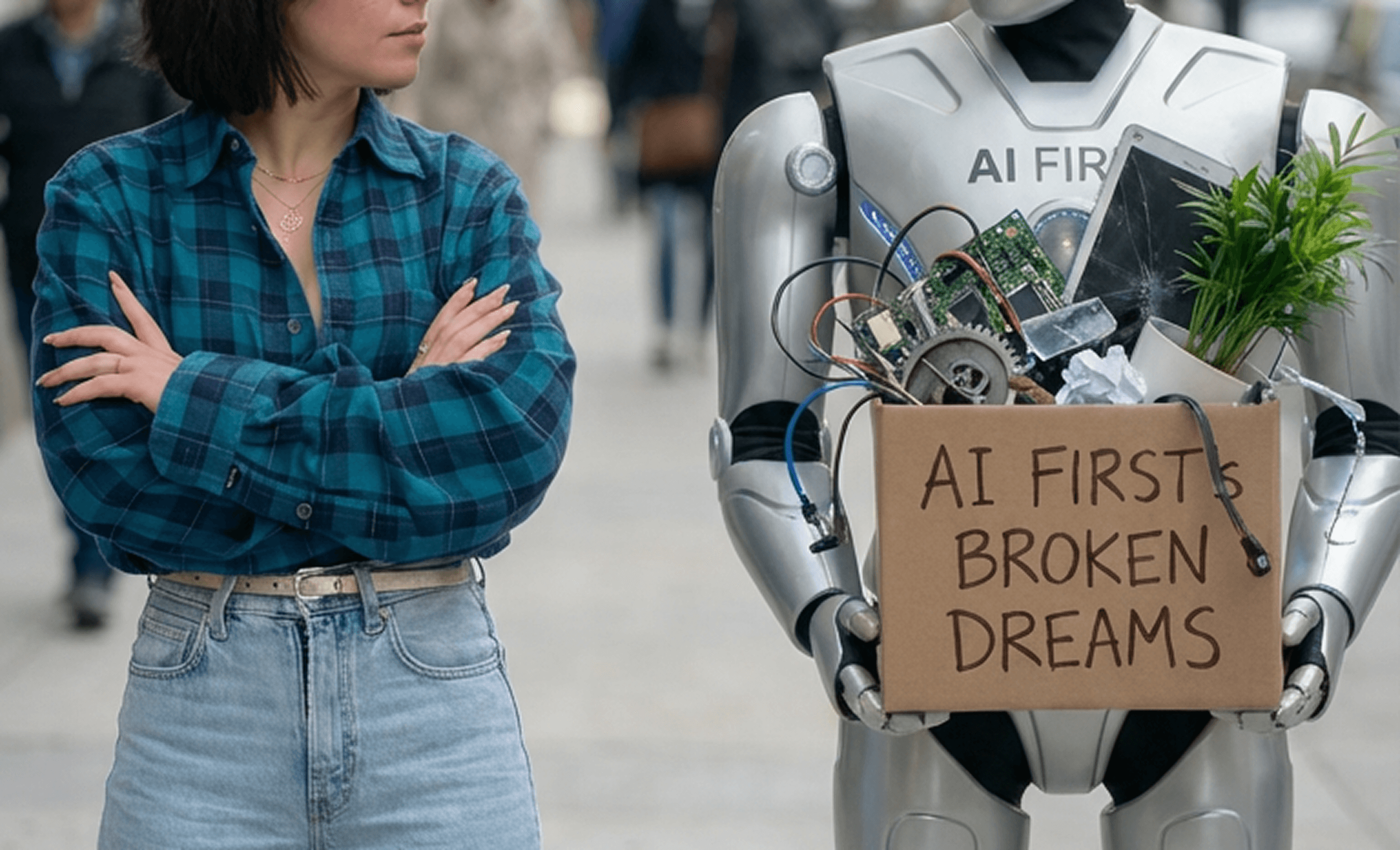
Breaking Up with the 'AI First' Approach
For a while there, during the initial AI boom, it felt like every business strategy meeting began with, "How can we implement AI?" The focus was 'AI First', shoving AI into every corner, whether it made sense or not. The allure of being at the cutting edge, of boasting "AI-powered" solutions, was powerful. But, as many of us on the ground saw, this often led to more head-scratching than breakthroughs.
This 'AI First' mindset, where the primary focus is on implementing AI technology first and then trying to find problems or applications for it, meant we often fell into the same old problems that the principles of Experience Design & Strategy protected us against. These included:
Technology-Driven, Not Problem-Driven:
Instead of identifying a business problem or customer need and then exploring how various technologies (including AI) might solve it, 'AI First' companies would start with the premise: "We need to use AI." The question then became, "What can we do with AI?" rather than "What problem do we need to solve?"Focus on AI Capabilities over User Needs:
The emphasis was often on showcasing what the AI could technically do (e.g., process vast amounts of data, recognize patterns, generate text) rather than on how those capabilities genuinely served a specific user, improved an experience, or created measurable business value.Motivated by Hype and FOMO (Fear Of Missing Out):
Many organizations adopted an 'AI First' approach driven by the perception that “AI is the next big thing.” They wanted to be seen as innovative, feared falling behind competitors, or hoped to unlock massive, transformative gains simply by deploying AI.
Big, Ambitious Projects:
This often led to large-scale initiatives aiming to fully automate complex processes, replace human roles entirely, or create completely new, AI-powered products from scratch, even if the underlying technology wasn't mature enough for such tasks or the human element was crucial.
Assumption of 100% Accuracy:
A common pitfall was assuming that AI could seamlessly handle tasks requiring absolute precision, nuance, or common sense, leading to disappointment when AI systems inevitably made errors in these complex scenarios."AI for AI's Sake":
There was a tendency to build AI solutions simply because the technology was available, even if simpler, more cost-effective, or human-centric solutions already existed or would be more appropriate.
I've witnessed first-hand the expensive, soul-crushing experiments that emerged from this 'AI First' approach. We would invest time and effort heavily in trying to automate complex tasks through experimentation, only to discover that AI, in its current state, struggles immensely, especially with expectations and scenarios demanding 100% accuracy. The results were often clumsy, frustrating for users, and financially draining for the business. We'd end up with AI solutions that failed to deliver, for several reasons, but primarily because we were trying to solve problems where human intuition, empathy, or a complete lack of ambiguity were non-negotiable.
“Many companies are finding that AI is not a magic bullet, but a tool that requires significant human expertise and organizational change to yield value.”
– Thomas Davenport, Distinguished Professor, author of "Competing on Analytics" and "The AI Advantage"

“Sprinkling AI” Where it Makes Sense
Vitaly says “Some companies add AI where it can be useful enough and deliver user value. They sprinkle AI across user journeys where it adds value.” This is precisely why 'AI Second', or rather Experience Design’s tried and true “Value First”, approach felt like a breath of fresh air, a validation of the path I've long been advocating.
I remember how great it was working with a company that agreed to shift their perspective; instead of starting with AI, we started with the user. We dove deep into their journey, mapping out pain points, moments of delight, and genuine opportunities for value creation. Only then, once we truly understood the human need and the business objective, did we consider where AI could genuinely enhance the experience.
The outcome? Not only was it significantly more cost-effective because we weren't building large, speculative AI systems, but it was also far more successful. The AI feature we implemented wasn't disruptive; it was additive, helpful, and often invisible to the user in the best possible way. It made an existing process smoother, not more complicated, and optimized employee time and focus rather than removing roles.
Vitaly shares several great examples of companies doing this well, companies and ideas that have clear value propositions and position AI as a feature, not the value innate of itself. In addition to the examples Vitaly shared, I've seen or envisioned several powerful 'AI Second' use cases that truly exemplify this approach:
Contextual Content Curation:
Instead of AI creating all content, imagine AI acting as an intelligent librarian or personal assistant. For an e-commerce site, it could learn user preferences to subtly reorder search results, highlight relevant product bundles, or suggest accessories, making the discovery process more intuitive without taking over the purchasing decision.Design Augmentation & Assistantship:
Designers aren't being replaced by AI that generates entire websites from scratch. Instead, AI can be a powerful co-pilot. Think of tools that instantly remove image backgrounds, suggest color palettes based on brand guidelines, generate variations of icons, or even provide real-time accessibility feedback on designs. The human designer retains creative control, while AI handles the more repetitive or data-intensive tasks. (Figma and Dovetail for example)Enhanced Accessibility Features:
AI's ability to process and understand information can be a game-changer for accessibility. Real-time captioning in virtual meetings, AI-powered descriptions of images for the visually impaired, or instant translation features are all "sprinkles" that dramatically improve the experience for specific user groups, without being the primary product offering.
“My dream for AI is that it empowers people, enhances human creativity, and extends human understanding. It's about 'intelligence augmentation,' not 'artificial intelligence' in the sense of replacing us.”
– Fei-Fei Li, Co-director of Stanford's Human-Centered AI Institute
How to Approach 'AI Second'
Have no fear – adopting 'AI Second' is not rocket science. It is a return to the principles we have known for quite a while with digital product and service development. But if you're new to Experience Strategy and Design, and looking to integrate AI more thoughtfully, here’s how to approach it from an 'AI Second' perspective:
Start with the Human Problem, Not the Tech:
Before thinking about AI, begin building empathy, immerse yourself in understanding who your users are; what are their needs, pain points, and desires. What are they trying to achieve? Where are they struggling?Map the Journey for Value:
Conduct thorough customer journey mapping. Identify specific touchpoints where a small, intelligent assist could alleviate friction or amplify delight.Define Success Beyond "AI-Powered":
Clearly articulate what success looks like for the user and the business. Is it faster task completion? Reduced cognitive load? Increased engagement? And importantly, what level of accuracy is truly needed? Is 80% good enough to be genuinely helpful?Think Augmentation, Not Automation:
Position AI as a tool that amplifies human capability, not replaces it. How can AI make your users smarter, faster, or more efficient, while keeping them in control?Small, Iterative, and Data-Driven:
Don't try to boil the ocean. Start with small, focused AI features. Pilot them, gather data, learn from real user interactions, and iterate. This reduces risk and ensures you're building something truly valuable.
When in doubt, work with Experience Strategists, UX Designers, or UX Consultants to support your team with identifying the right opportunities to work on – see what I did there ;).

We Can Still Be Friends with 'AI First'
I admit, despite the pitfalls for many, there are still some cases where using an 'AI First' approach has its place and is, in fact, necessary. This applies, for example, with fundamental AI research and deep tech companies where the AI is the product or the primary area of research with the goal being breakthroughs in AI capabilities.
In my experience, the vast majority of companies who struggle with 'AI First' are those who apply it to existing products, services, or customer journeys where the primary goal is to enhance user experience, optimize business processes, or solve human-centric problems. Again, this failure is largely due to the problem being inadequately defined or evaluated before tech was brought to the table.
The 'AI First' era, with its often misplaced ambitions, taught us valuable and, sometimes, hard lessons. But for most of us working with existing products and services, the 'AI Second' philosophy offers a more sustainable, effective, and frankly, more human-centered path forward. Both approaches have their place, but with AI exhaustion rising and the digital world feeling less and less 'human', I urge development and business teams to challenge the impulse to treat AI implementation as the end goal itself. Instead, let's get back to being strategic and empathetic. Let's remember that the most powerful technologies work best when they serve our experiences, not dictate them.
“Don't build AI for AI's sake. Build AI to solve real problems.”
– Andrew Ng, Co-founder of Google Brain, Coursera, Landing AI
What are your thoughts? Where have you seen 'AI Second' truly shine, or where do you think it has the most untapped potential in improving experiences today? Let’s discuss :)
Resource Goodie Bag
Don’t just take my word, check out these great resources:
Images are my collaboration of my own photos and ai generation using Figma's AI generation tools.
Follow Me or Get in Touch
Experience Strategy and Design are my passions! Follow me on medium to engage in the discussion and for more content like this!
If you're keen on working with an experienced Experience Strategist or UX/UI Designer, or want to know more about my work check out my portfolio and get in touch :)
More to Discover

Break up with 'AI First'
Why 'AI Second' Beats the 'AI First' Hype.
Insights
Jan 20, 2026
I recently tuned into Vitaly Friedman's insightful lesson, "The State of AI – Design Patterns For AI Interfaces," and one concept immediately struck a chord with me, reverberating through my experience as a Senior Experience Designer and Strategist: the idea of ‘AI Second’, not ‘AI First’. It’s a philosophy that, frankly, we should all be embracing more rigorously.
Breaking Up with the 'AI First' Approach
For a while there, during the initial AI boom, it felt like every business strategy meeting began with, "How can we implement AI?" The focus was 'AI First', shoving AI into every corner, whether it made sense or not. The allure of being at the cutting edge, of boasting "AI-powered" solutions, was powerful. But, as many of us on the ground saw, this often led to more head-scratching than breakthroughs.
This 'AI First' mindset, where the primary focus is on implementing AI technology first and then trying to find problems or applications for it, meant we often fell into the same old problems that the principles of Experience Design & Strategy protected us against. These included:
Technology-Driven, Not Problem-Driven:
Instead of identifying a business problem or customer need and then exploring how various technologies (including AI) might solve it, 'AI First' companies would start with the premise: "We need to use AI." The question then became, "What can we do with AI?" rather than "What problem do we need to solve?"Focus on AI Capabilities over User Needs:
The emphasis was often on showcasing what the AI could technically do (e.g., process vast amounts of data, recognize patterns, generate text) rather than on how those capabilities genuinely served a specific user, improved an experience, or created measurable business value.Motivated by Hype and FOMO (Fear Of Missing Out):
Many organizations adopted an 'AI First' approach driven by the perception that “AI is the next big thing.” They wanted to be seen as innovative, feared falling behind competitors, or hoped to unlock massive, transformative gains simply by deploying AI.
Big, Ambitious Projects:
This often led to large-scale initiatives aiming to fully automate complex processes, replace human roles entirely, or create completely new, AI-powered products from scratch, even if the underlying technology wasn't mature enough for such tasks or the human element was crucial.
Assumption of 100% Accuracy:
A common pitfall was assuming that AI could seamlessly handle tasks requiring absolute precision, nuance, or common sense, leading to disappointment when AI systems inevitably made errors in these complex scenarios."AI for AI's Sake":
There was a tendency to build AI solutions simply because the technology was available, even if simpler, more cost-effective, or human-centric solutions already existed or would be more appropriate.
I've witnessed first-hand the expensive, soul-crushing experiments that emerged from this 'AI First' approach. We would invest time and effort heavily in trying to automate complex tasks through experimentation, only to discover that AI, in its current state, struggles immensely, especially with expectations and scenarios demanding 100% accuracy. The results were often clumsy, frustrating for users, and financially draining for the business. We'd end up with AI solutions that failed to deliver, for several reasons, but primarily because we were trying to solve problems where human intuition, empathy, or a complete lack of ambiguity were non-negotiable.
“Many companies are finding that AI is not a magic bullet, but a tool that requires significant human expertise and organizational change to yield value.”
– Thomas Davenport, Distinguished Professor, author of "Competing on Analytics" and "The AI Advantage"
“Sprinkling AI” Where it Makes Sense
Vitaly says “Some companies add AI where it can be useful enough and deliver user value. They sprinkle AI across user journeys where it adds value.” This is precisely why 'AI Second', or rather Experience Design’s tried and true “Value First”, approach felt like a breath of fresh air, a validation of the path I've long been advocating.
I remember how great it was working with a company that agreed to shift their perspective; instead of starting with AI, we started with the user. We dove deep into their journey, mapping out pain points, moments of delight, and genuine opportunities for value creation. Only then, once we truly understood the human need and the business objective, did we consider where AI could genuinely enhance the experience.
The outcome? Not only was it significantly more cost-effective because we weren't building large, speculative AI systems, but it was also far more successful. The AI feature we implemented wasn't disruptive; it was additive, helpful, and often invisible to the user in the best possible way. It made an existing process smoother, not more complicated, and optimized employee time and focus rather than removing roles.
Vitaly shares several great examples of companies doing this well, companies and ideas that have clear value propositions and position AI as a feature, not the value innate of itself. In addition to the examples Vitaly shared, I've seen or envisioned several powerful 'AI Second' use cases that truly exemplify this approach:
Contextual Content Curation:
Instead of AI creating all content, imagine AI acting as an intelligent librarian or personal assistant. For an e-commerce site, it could learn user preferences to subtly reorder search results, highlight relevant product bundles, or suggest accessories, making the discovery process more intuitive without taking over the purchasing decision.Design Augmentation & Assistantship:
Designers aren't being replaced by AI that generates entire websites from scratch. Instead, AI can be a powerful co-pilot. Think of tools that instantly remove image backgrounds, suggest color palettes based on brand guidelines, generate variations of icons, or even provide real-time accessibility feedback on designs. The human designer retains creative control, while AI handles the more repetitive or data-intensive tasks. (Figma and Dovetail for example)Enhanced Accessibility Features:
AI's ability to process and understand information can be a game-changer for accessibility. Real-time captioning in virtual meetings, AI-powered descriptions of images for the visually impaired, or instant translation features are all "sprinkles" that dramatically improve the experience for specific user groups, without being the primary product offering.
“My dream for AI is that it empowers people, enhances human creativity, and extends human understanding. It's about 'intelligence augmentation,' not 'artificial intelligence' in the sense of replacing us.”
– Fei-Fei Li, Co-director of Stanford's Human-Centered AI Institute
How to Approach 'AI Second'
Have no fear – adopting 'AI Second' is not rocket science. It is a return to the principles we have known for quite a while with digital product and service development. But if you're new to Experience Strategy and Design, and looking to integrate AI more thoughtfully, here’s how to approach it from an 'AI Second' perspective:
Start with the Human Problem, Not the Tech:
Before thinking about AI, begin building empathy, immerse yourself in understanding who your users are; what are their needs, pain points, and desires. What are they trying to achieve? Where are they struggling?Map the Journey for Value:
Conduct thorough customer journey mapping. Identify specific touchpoints where a small, intelligent assist could alleviate friction or amplify delight.Define Success Beyond "AI-Powered":
Clearly articulate what success looks like for the user and the business. Is it faster task completion? Reduced cognitive load? Increased engagement? And importantly, what level of accuracy is truly needed? Is 80% good enough to be genuinely helpful?Think Augmentation, Not Automation:
Position AI as a tool that amplifies human capability, not replaces it. How can AI make your users smarter, faster, or more efficient, while keeping them in control?Small, Iterative, and Data-Driven:
Don't try to boil the ocean. Start with small, focused AI features. Pilot them, gather data, learn from real user interactions, and iterate. This reduces risk and ensures you're building something truly valuable.
When in doubt, work with Experience Strategists, UX Designers, or UX Consultants to support your team with identifying the right opportunities to work on – see what I did there ;).
We Can Still Be Friends with 'AI First'
I admit, despite the pitfalls for many, there are still some cases where using an 'AI First' approach has its place and is, in fact, necessary. This applies, for example, with fundamental AI research and deep tech companies where the AI is the product or the primary area of research with the goal being breakthroughs in AI capabilities.
In my experience, the vast majority of companies who struggle with 'AI First' are those who apply it to existing products, services, or customer journeys where the primary goal is to enhance user experience, optimize business processes, or solve human-centric problems. Again, this failure is largely due to the problem being inadequately defined or evaluated before tech was brought to the table.
The 'AI First' era, with its often misplaced ambitions, taught us valuable and, sometimes, hard lessons. But for most of us working with existing products and services, the 'AI Second' philosophy offers a more sustainable, effective, and frankly, more human-centered path forward. Both approaches have their place, but with AI exhaustion rising and the digital world feeling less and less 'human', I urge development and business teams to challenge the impulse to treat AI implementation as the end goal itself. Instead, let's get back to being strategic and empathetic. Let's remember that the most powerful technologies work best when they serve our experiences, not dictate them.
“Don't build AI for AI's sake. Build AI to solve real problems.”
– Andrew Ng, Co-founder of Google Brain, Coursera, Landing AI
What are your thoughts? Where have you seen 'AI Second' truly shine, or where do you think it has the most untapped potential in improving experiences today? Let’s discuss :)
Resource Goodie Bag
Don’t just take my word, check out these great resources:
Images are my collaboration of my own photos and ai generation using Figma's AI generation tools.
Follow Me or Get in Touch
Experience Strategy and Design are my passions! Follow me on medium to engage in the discussion and for more content like this!
If you're keen on working with an experienced Experience Strategist or UX/UI Designer, or want to know more about my work check out my portfolio and get in touch :)
More to Discover
Break up with 'AI First'
Why 'AI Second' Beats the 'AI First' Hype.
Insights
Jan 20, 2026
I recently tuned into Vitaly Friedman's insightful lesson, "The State of AI – Design Patterns For AI Interfaces," and one concept immediately struck a chord with me, reverberating through my experience as a Senior Experience Designer and Strategist: the idea of ‘AI Second’, not ‘AI First’. It’s a philosophy that, frankly, we should all be embracing more rigorously.
Breaking Up with the 'AI First' Approach
For a while there, during the initial AI boom, it felt like every business strategy meeting began with, "How can we implement AI?" The focus was 'AI First', shoving AI into every corner, whether it made sense or not. The allure of being at the cutting edge, of boasting "AI-powered" solutions, was powerful. But, as many of us on the ground saw, this often led to more head-scratching than breakthroughs.
This 'AI First' mindset, where the primary focus is on implementing AI technology first and then trying to find problems or applications for it, meant we often fell into the same old problems that the principles of Experience Design & Strategy protected us against. These included:
Technology-Driven, Not Problem-Driven:
Instead of identifying a business problem or customer need and then exploring how various technologies (including AI) might solve it, 'AI First' companies would start with the premise: "We need to use AI." The question then became, "What can we do with AI?" rather than "What problem do we need to solve?"Focus on AI Capabilities over User Needs:
The emphasis was often on showcasing what the AI could technically do (e.g., process vast amounts of data, recognize patterns, generate text) rather than on how those capabilities genuinely served a specific user, improved an experience, or created measurable business value.Motivated by Hype and FOMO (Fear Of Missing Out):
Many organizations adopted an 'AI First' approach driven by the perception that “AI is the next big thing.” They wanted to be seen as innovative, feared falling behind competitors, or hoped to unlock massive, transformative gains simply by deploying AI.
Big, Ambitious Projects:
This often led to large-scale initiatives aiming to fully automate complex processes, replace human roles entirely, or create completely new, AI-powered products from scratch, even if the underlying technology wasn't mature enough for such tasks or the human element was crucial.
Assumption of 100% Accuracy:
A common pitfall was assuming that AI could seamlessly handle tasks requiring absolute precision, nuance, or common sense, leading to disappointment when AI systems inevitably made errors in these complex scenarios."AI for AI's Sake":
There was a tendency to build AI solutions simply because the technology was available, even if simpler, more cost-effective, or human-centric solutions already existed or would be more appropriate.
I've witnessed first-hand the expensive, soul-crushing experiments that emerged from this 'AI First' approach. We would invest time and effort heavily in trying to automate complex tasks through experimentation, only to discover that AI, in its current state, struggles immensely, especially with expectations and scenarios demanding 100% accuracy. The results were often clumsy, frustrating for users, and financially draining for the business. We'd end up with AI solutions that failed to deliver, for several reasons, but primarily because we were trying to solve problems where human intuition, empathy, or a complete lack of ambiguity were non-negotiable.
“Many companies are finding that AI is not a magic bullet, but a tool that requires significant human expertise and organizational change to yield value.”
– Thomas Davenport, Distinguished Professor, author of "Competing on Analytics" and "The AI Advantage"
“Sprinkling AI” Where it Makes Sense
Vitaly says “Some companies add AI where it can be useful enough and deliver user value. They sprinkle AI across user journeys where it adds value.” This is precisely why 'AI Second', or rather Experience Design’s tried and true “Value First”, approach felt like a breath of fresh air, a validation of the path I've long been advocating.
I remember how great it was working with a company that agreed to shift their perspective; instead of starting with AI, we started with the user. We dove deep into their journey, mapping out pain points, moments of delight, and genuine opportunities for value creation. Only then, once we truly understood the human need and the business objective, did we consider where AI could genuinely enhance the experience.
The outcome? Not only was it significantly more cost-effective because we weren't building large, speculative AI systems, but it was also far more successful. The AI feature we implemented wasn't disruptive; it was additive, helpful, and often invisible to the user in the best possible way. It made an existing process smoother, not more complicated, and optimized employee time and focus rather than removing roles.
Vitaly shares several great examples of companies doing this well, companies and ideas that have clear value propositions and position AI as a feature, not the value innate of itself. In addition to the examples Vitaly shared, I've seen or envisioned several powerful 'AI Second' use cases that truly exemplify this approach:
Contextual Content Curation:
Instead of AI creating all content, imagine AI acting as an intelligent librarian or personal assistant. For an e-commerce site, it could learn user preferences to subtly reorder search results, highlight relevant product bundles, or suggest accessories, making the discovery process more intuitive without taking over the purchasing decision.Design Augmentation & Assistantship:
Designers aren't being replaced by AI that generates entire websites from scratch. Instead, AI can be a powerful co-pilot. Think of tools that instantly remove image backgrounds, suggest color palettes based on brand guidelines, generate variations of icons, or even provide real-time accessibility feedback on designs. The human designer retains creative control, while AI handles the more repetitive or data-intensive tasks. (Figma and Dovetail for example)Enhanced Accessibility Features:
AI's ability to process and understand information can be a game-changer for accessibility. Real-time captioning in virtual meetings, AI-powered descriptions of images for the visually impaired, or instant translation features are all "sprinkles" that dramatically improve the experience for specific user groups, without being the primary product offering.
“My dream for AI is that it empowers people, enhances human creativity, and extends human understanding. It's about 'intelligence augmentation,' not 'artificial intelligence' in the sense of replacing us.”
– Fei-Fei Li, Co-director of Stanford's Human-Centered AI Institute
How to Approach 'AI Second'
Have no fear – adopting 'AI Second' is not rocket science. It is a return to the principles we have known for quite a while with digital product and service development. But if you're new to Experience Strategy and Design, and looking to integrate AI more thoughtfully, here’s how to approach it from an 'AI Second' perspective:
Start with the Human Problem, Not the Tech:
Before thinking about AI, begin building empathy, immerse yourself in understanding who your users are; what are their needs, pain points, and desires. What are they trying to achieve? Where are they struggling?Map the Journey for Value:
Conduct thorough customer journey mapping. Identify specific touchpoints where a small, intelligent assist could alleviate friction or amplify delight.Define Success Beyond "AI-Powered":
Clearly articulate what success looks like for the user and the business. Is it faster task completion? Reduced cognitive load? Increased engagement? And importantly, what level of accuracy is truly needed? Is 80% good enough to be genuinely helpful?Think Augmentation, Not Automation:
Position AI as a tool that amplifies human capability, not replaces it. How can AI make your users smarter, faster, or more efficient, while keeping them in control?Small, Iterative, and Data-Driven:
Don't try to boil the ocean. Start with small, focused AI features. Pilot them, gather data, learn from real user interactions, and iterate. This reduces risk and ensures you're building something truly valuable.
When in doubt, work with Experience Strategists, UX Designers, or UX Consultants to support your team with identifying the right opportunities to work on – see what I did there ;).
We Can Still Be Friends with 'AI First'
I admit, despite the pitfalls for many, there are still some cases where using an 'AI First' approach has its place and is, in fact, necessary. This applies, for example, with fundamental AI research and deep tech companies where the AI is the product or the primary area of research with the goal being breakthroughs in AI capabilities.
In my experience, the vast majority of companies who struggle with 'AI First' are those who apply it to existing products, services, or customer journeys where the primary goal is to enhance user experience, optimize business processes, or solve human-centric problems. Again, this failure is largely due to the problem being inadequately defined or evaluated before tech was brought to the table.
The 'AI First' era, with its often misplaced ambitions, taught us valuable and, sometimes, hard lessons. But for most of us working with existing products and services, the 'AI Second' philosophy offers a more sustainable, effective, and frankly, more human-centered path forward. Both approaches have their place, but with AI exhaustion rising and the digital world feeling less and less 'human', I urge development and business teams to challenge the impulse to treat AI implementation as the end goal itself. Instead, let's get back to being strategic and empathetic. Let's remember that the most powerful technologies work best when they serve our experiences, not dictate them.
“Don't build AI for AI's sake. Build AI to solve real problems.”
– Andrew Ng, Co-founder of Google Brain, Coursera, Landing AI
What are your thoughts? Where have you seen 'AI Second' truly shine, or where do you think it has the most untapped potential in improving experiences today? Let’s discuss :)
Resource Goodie Bag
Don’t just take my word, check out these great resources:
Images are my collaboration of my own photos and ai generation using Figma's AI generation tools.
Follow Me or Get in Touch
Experience Strategy and Design are my passions! Follow me on medium to engage in the discussion and for more content like this!
If you're keen on working with an experienced Experience Strategist or UX/UI Designer, or want to know more about my work check out my portfolio and get in touch :)